How Can I Tell If My Car Needs Paint Correction or Just a Professional Detail?
Key Takeaways and Insights
Choosing between auto detailing and paint correction comes down to the physical condition of your vehicle's clear coat. Detailing deeply cleans and protects your existing paint, while paint correction uses machine polishing to permanently remove scratches, swirl marks, and oxidation. Understanding these differences allows Henderson vehicle owners to protect their investments against harsh desert conditions efficiently.
* A professional detail removes bonded contaminants and adds a protective layer against sun and dust.
* Paint correction is a restorative process that physically levels the clear coat to eliminate scratches and swirl marks.
* You can easily assess your vehicle at home using the plastic bag test, sunlight inspection, and water bead test to determine which service you need.
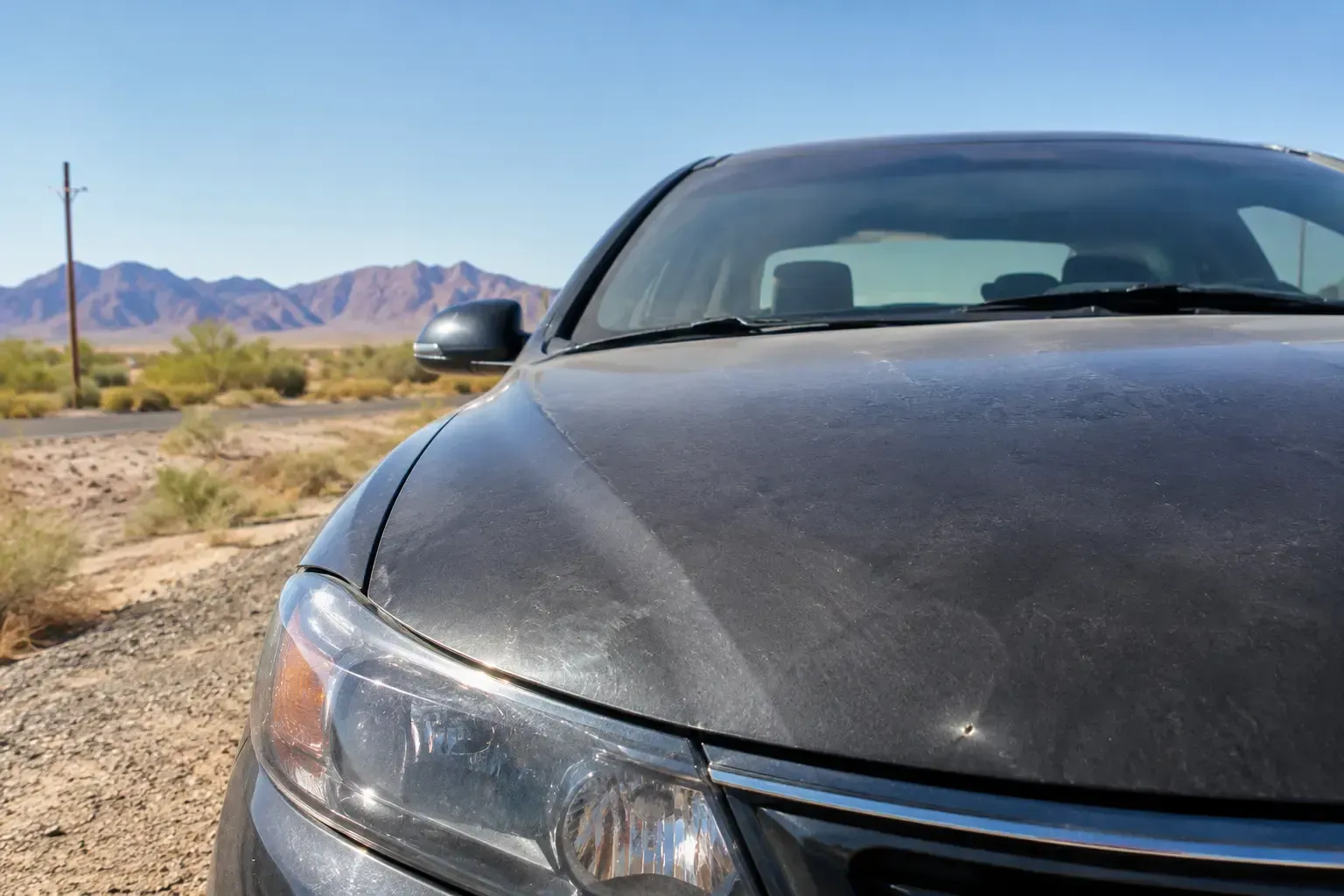
Driving through Henderson means battling a constant stream of desert dust. The intense Nevada sun beats down on your vehicle daily. Your exterior paint takes constant abuse. Over time, that original showroom shine begins to fade.
You wash your car regularly. You try to keep it clean. But eventually, a standard wash stops delivering results. The surface looks dull. Tiny web-like scratches appear under streetlights. This leaves many vehicle owners asking an important question. Does the car need a standard detail, or does it require full paint correction?
Understanding the difference saves you time and money. It also ensures you book the exact service your vehicle requires. We will break down exactly how to evaluate your vehicle exterior.
Understanding the Clear Coat on Your Vehicle
Modern vehicles feature a layered paint system. The bottom layer is the primer. The middle layer holds the actual color. The top layer is the clear coat. The clear coat is completely transparent. Its primary job is to protect the color underneath from UV rays and weather damage.
When your car loses its shine, the color coat is rarely the problem. The clear coat is taking the damage. Microscopic scratches scatter the light hitting your vehicle. This scattering creates a dull, faded appearance.
Your goal is to maintain that top clear coat. Different services handle this layer in completely different ways.
What Happens During a Mobile Car Detailing Service?
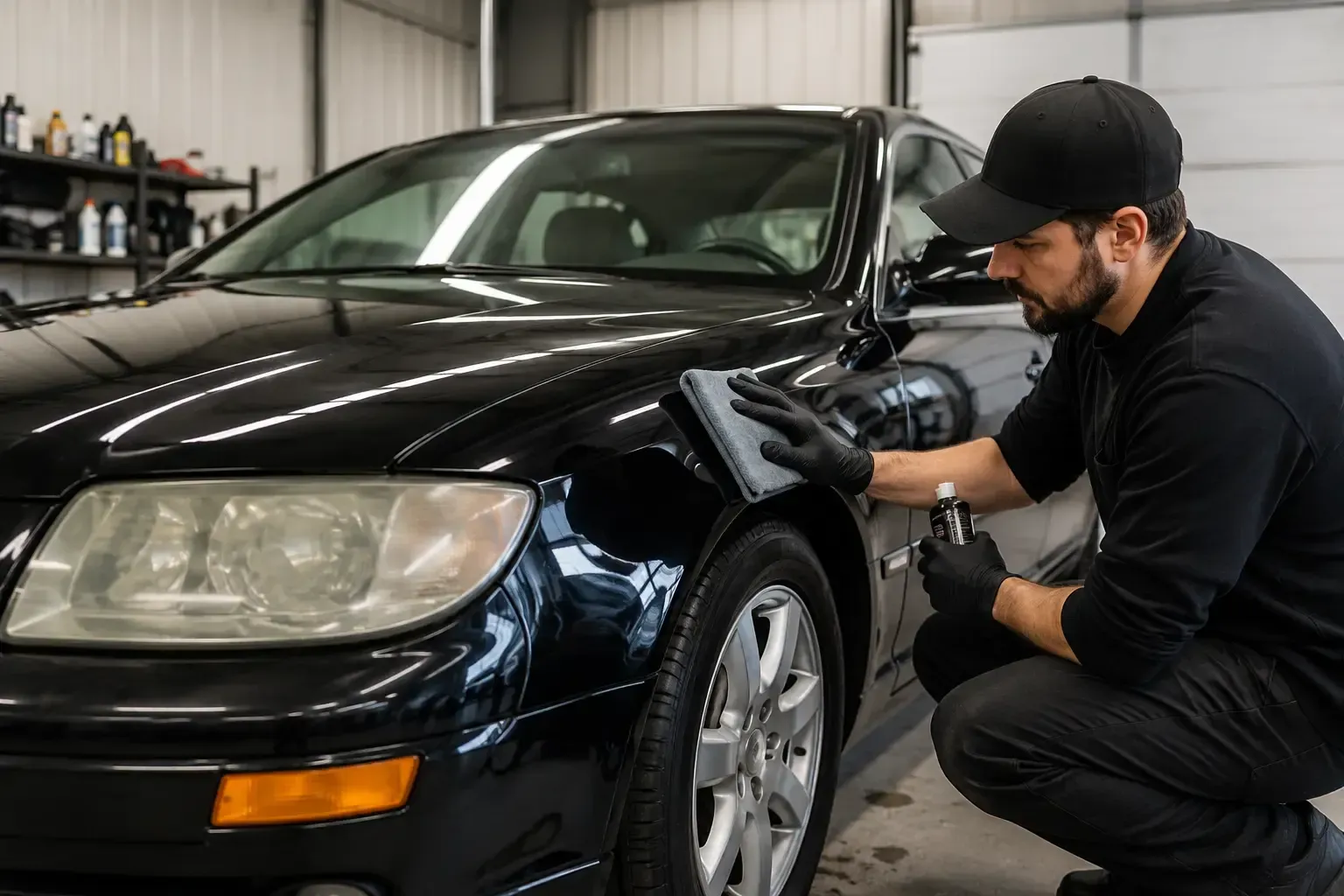
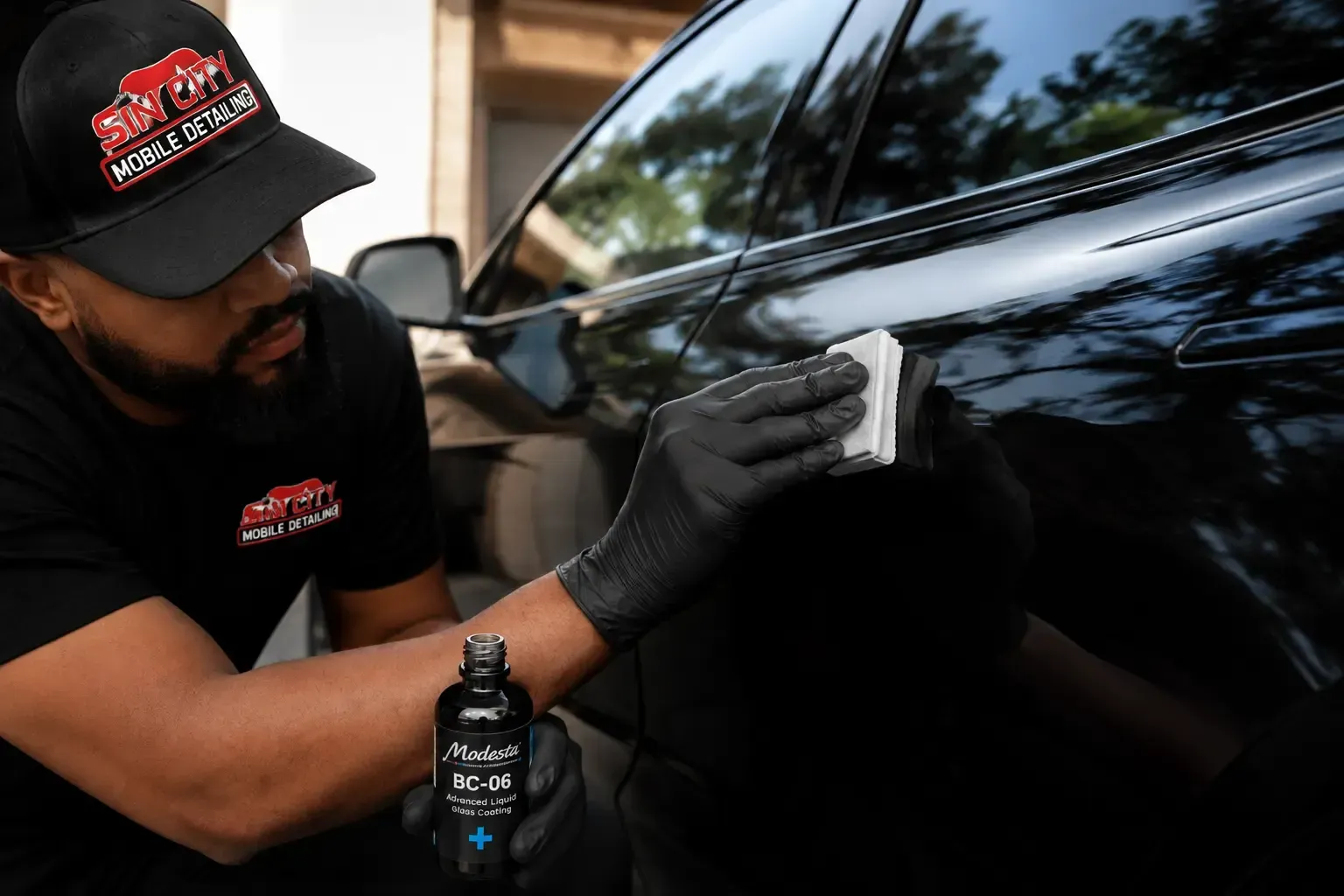
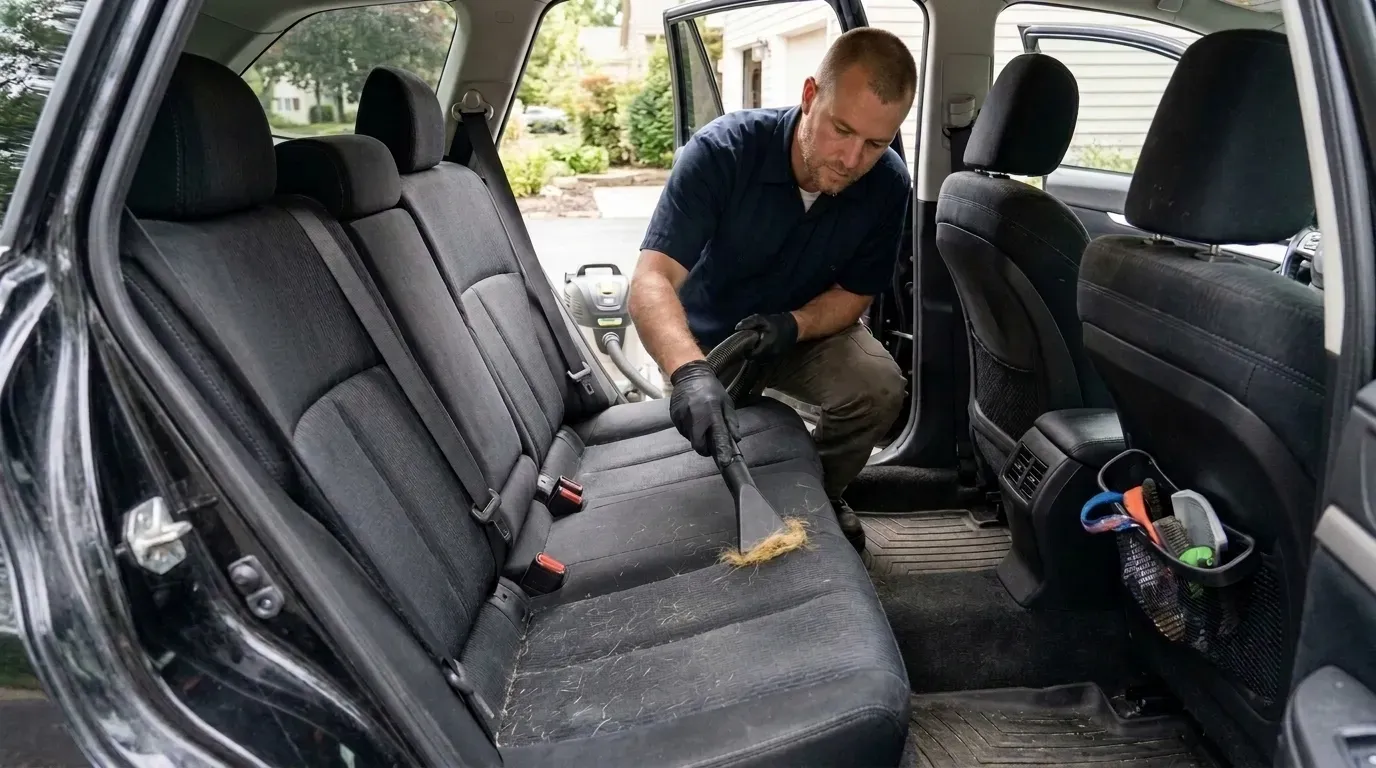
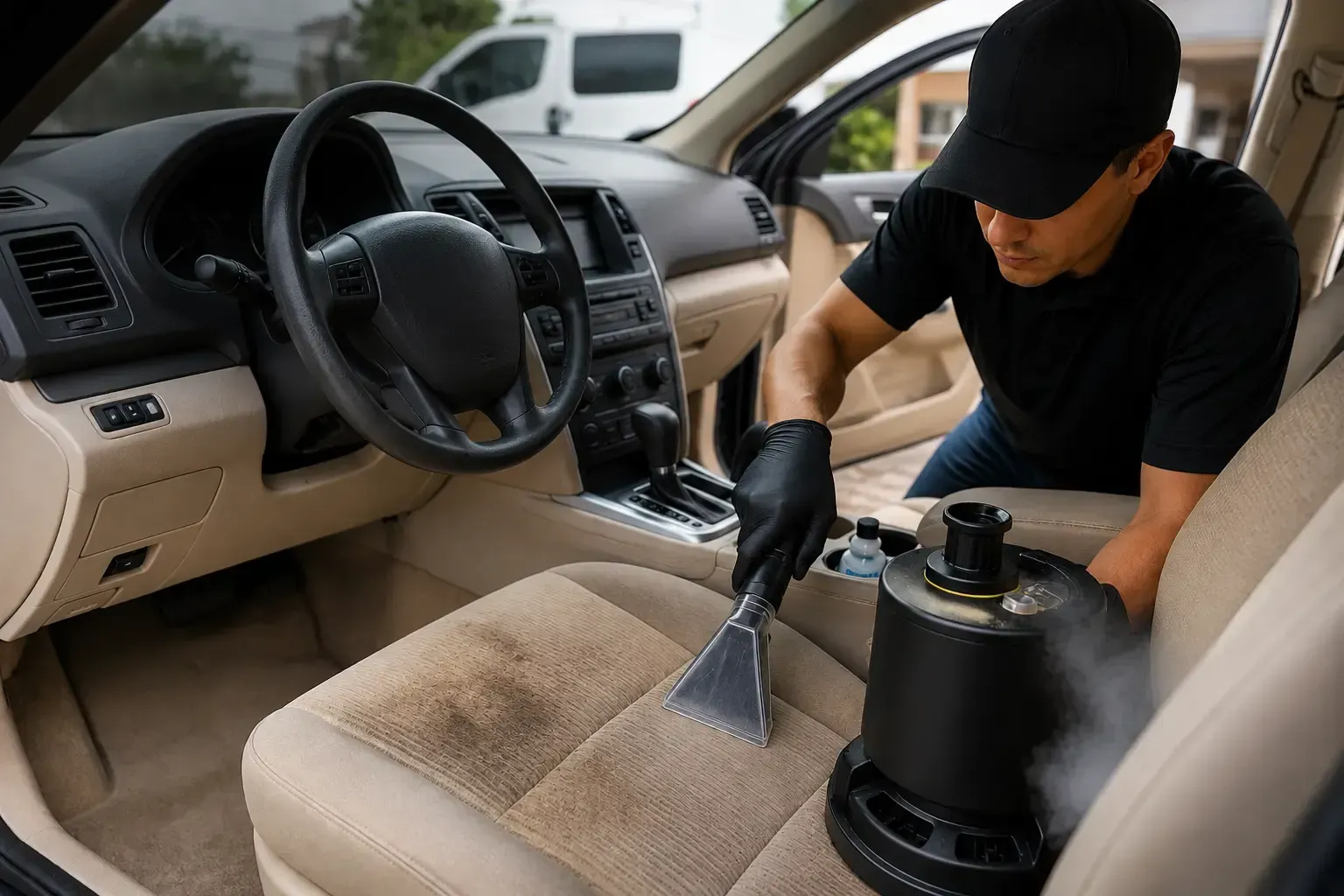
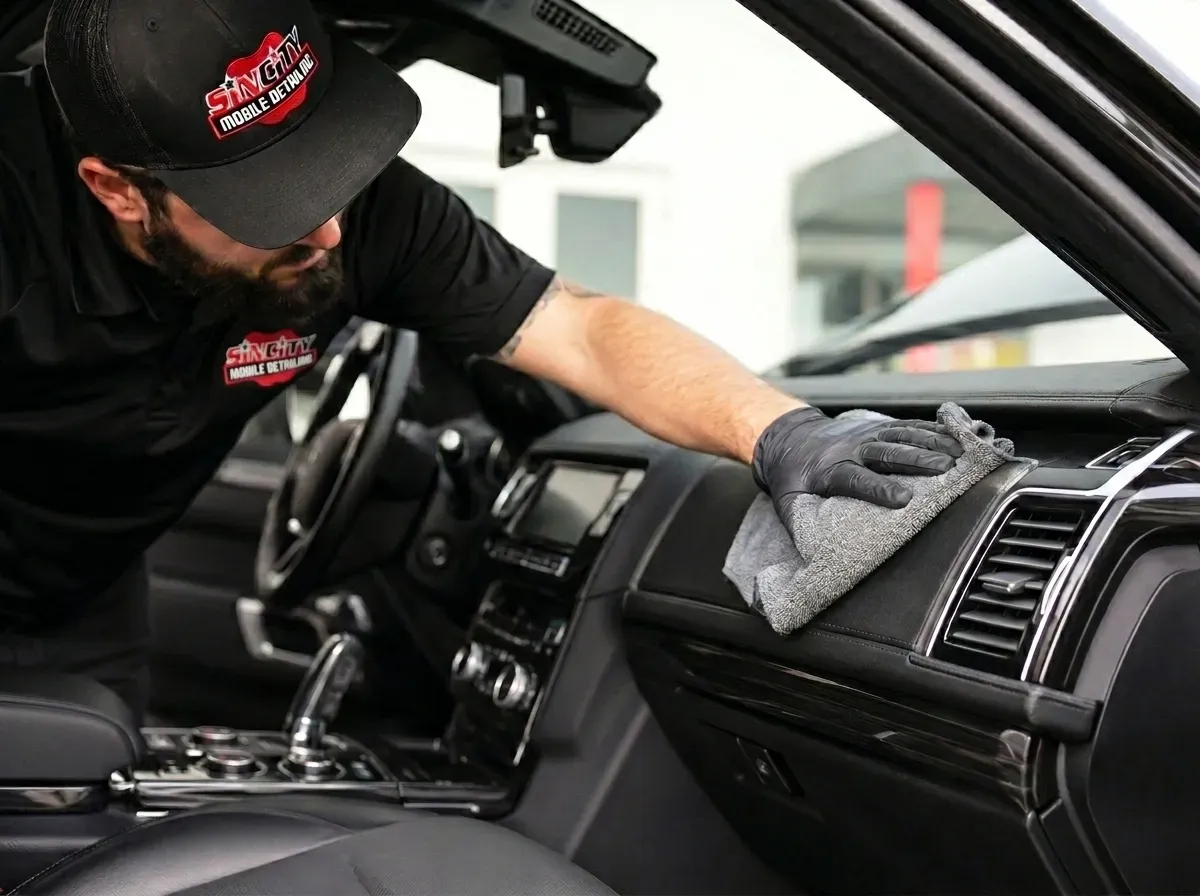
A standard car wash only removes loose surface dirt. A detail goes much deeper. Booking a professional Mobile Car Detailing Service focuses on deep cleaning and protection.
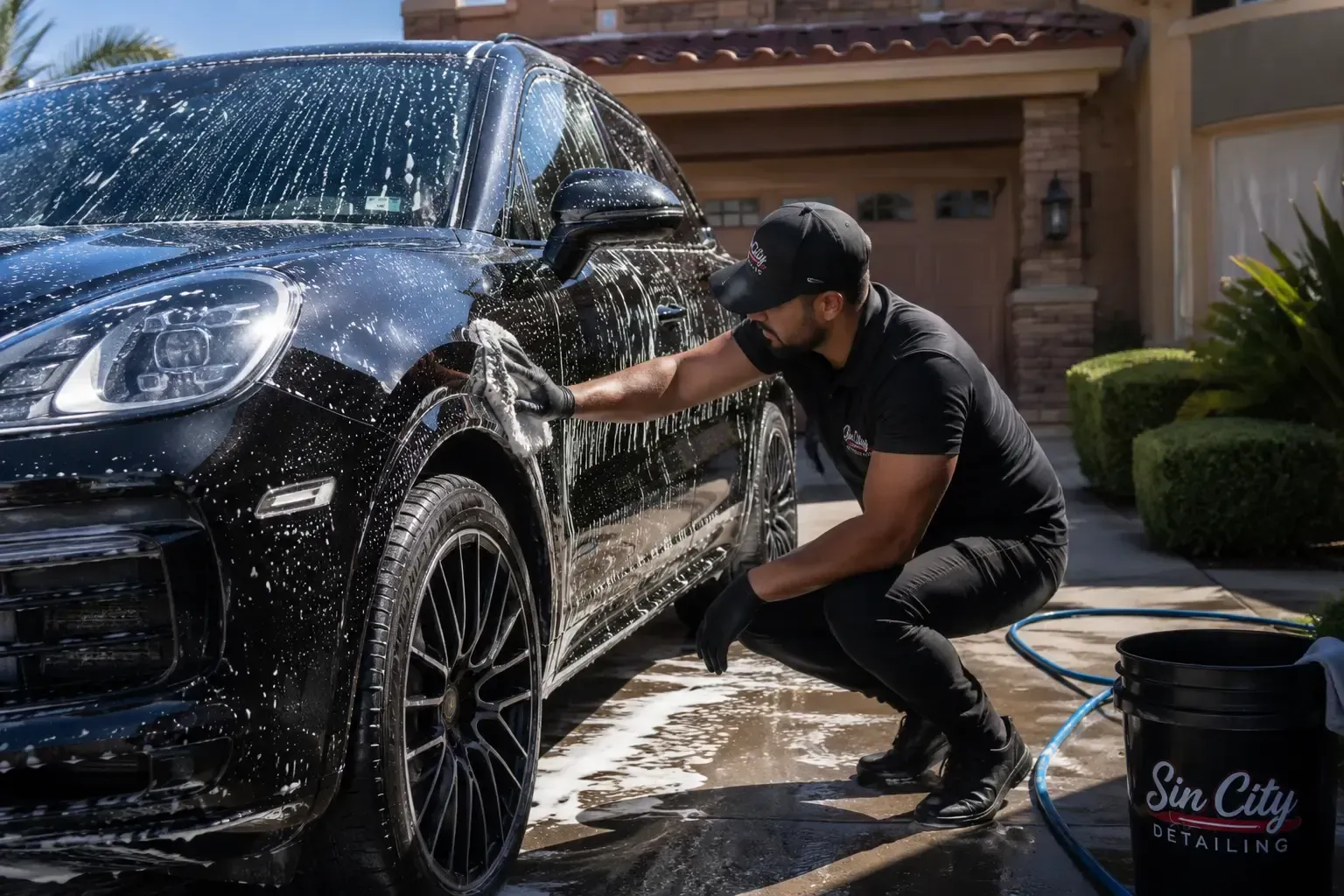
First, the vehicle receives a thorough hand wash. This lifts away heavy grime. Next comes chemical decontamination. Iron removers break down brake dust embedded in the paint. After that, a clay bar treatment removes bonded contaminants. This includes tree sap, road tar, and industrial fallout.
Once the paint is completely smooth, a protective layer is applied. This might be a high-quality wax, a synthetic sealant, or a ceramic spray.
Detailing preserves your current paint condition. It adds heavy gloss. It creates a protective barrier against the Henderson elements. However, detailing does not fix physical damage. It will not remove scratches. It will not eliminate swirl marks.
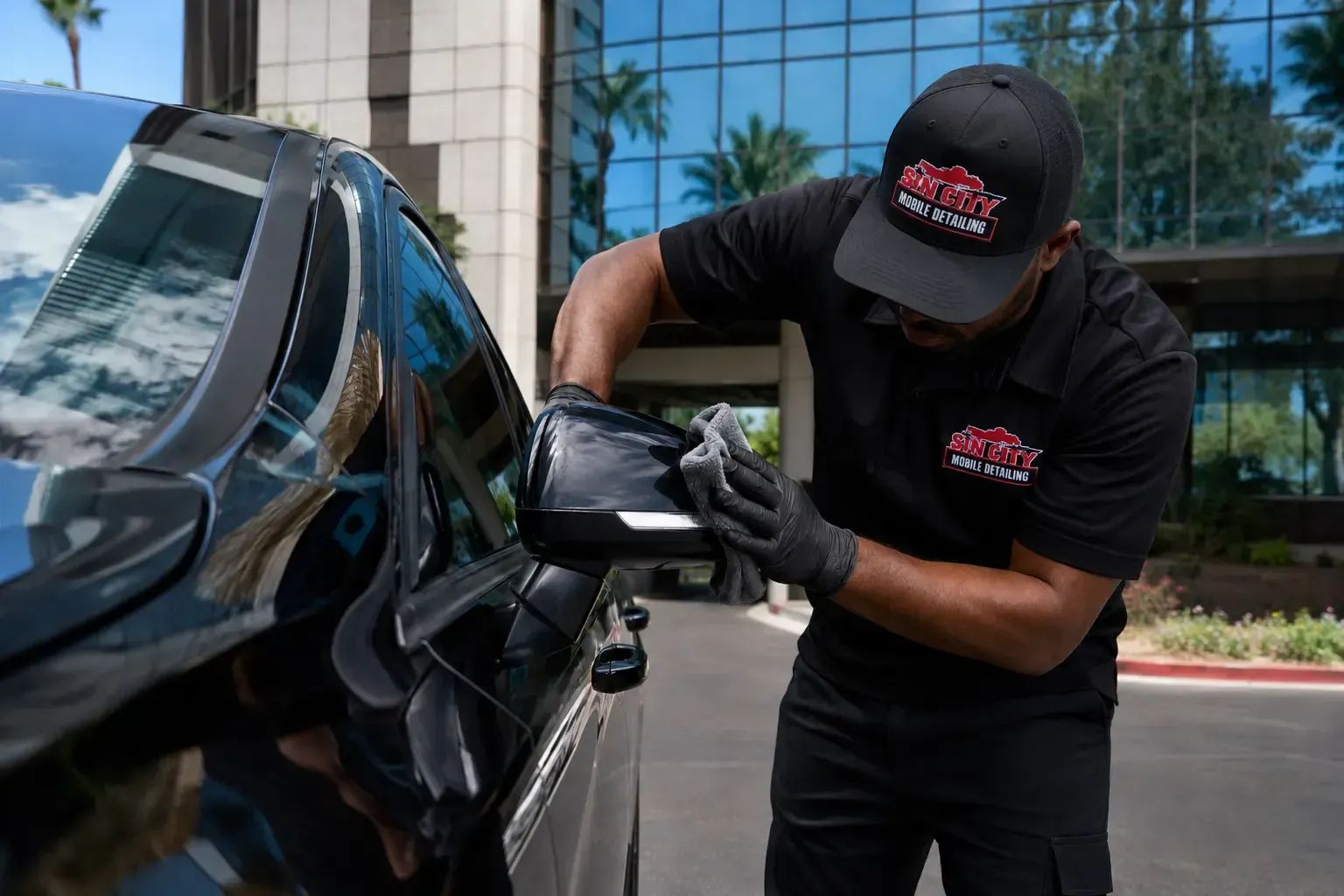
If your clear coat is lightly soiled but physically intact, detailing is the correct choice. We bring our equipment directly to your driveway or workplace. This makes routine maintenance effortless for busy families and professionals.
The Mechanics of Auto Paint Correction
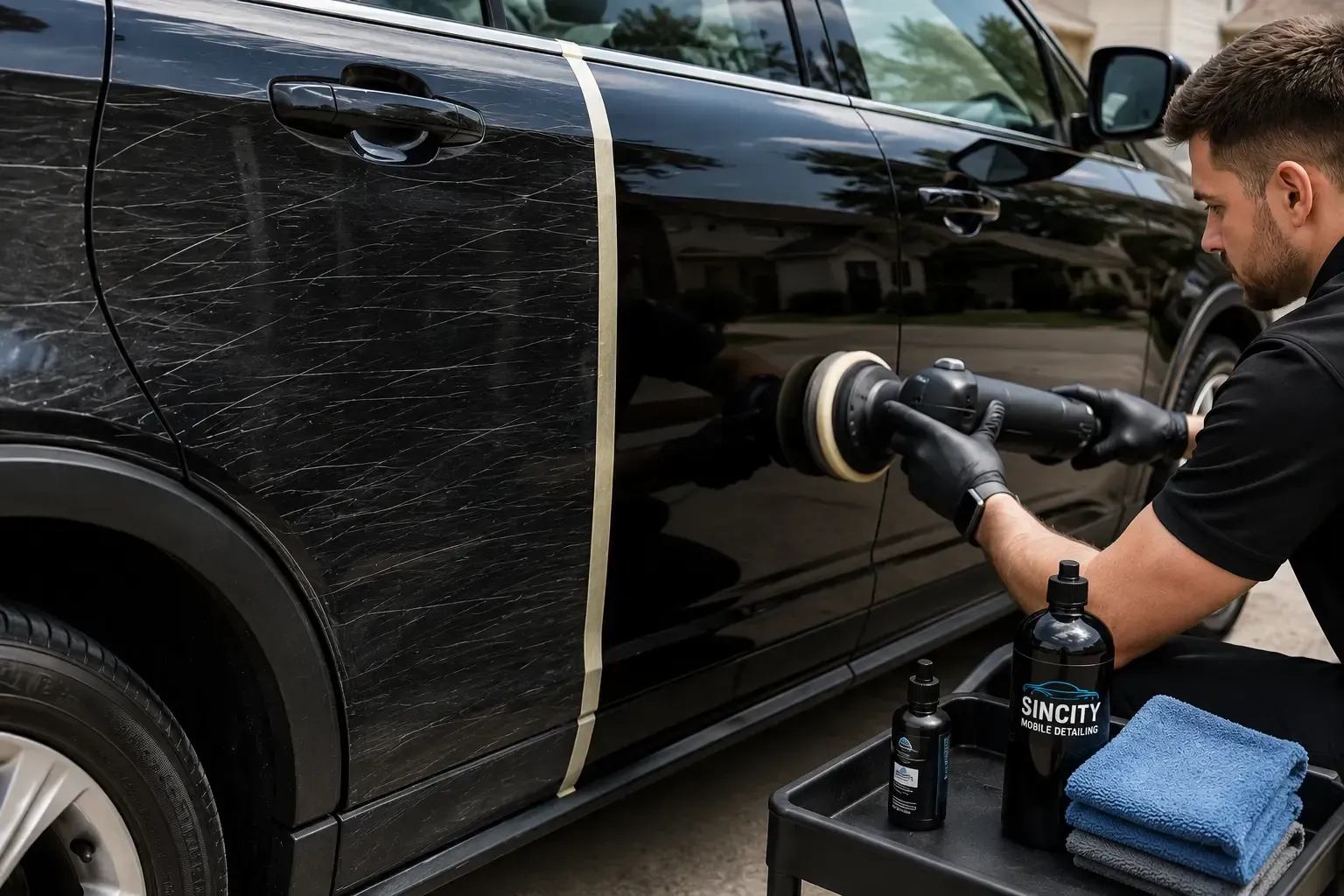
Paint correction is a completely different process. It is a highly technical restorative service. Instead of just cleaning the clear coat, correction actually levels it.
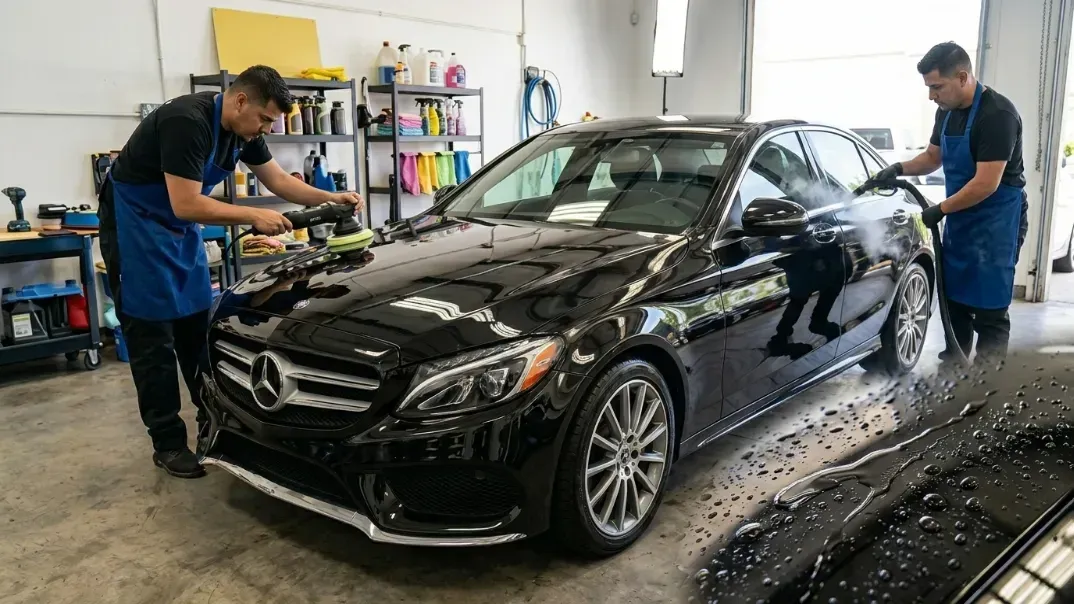
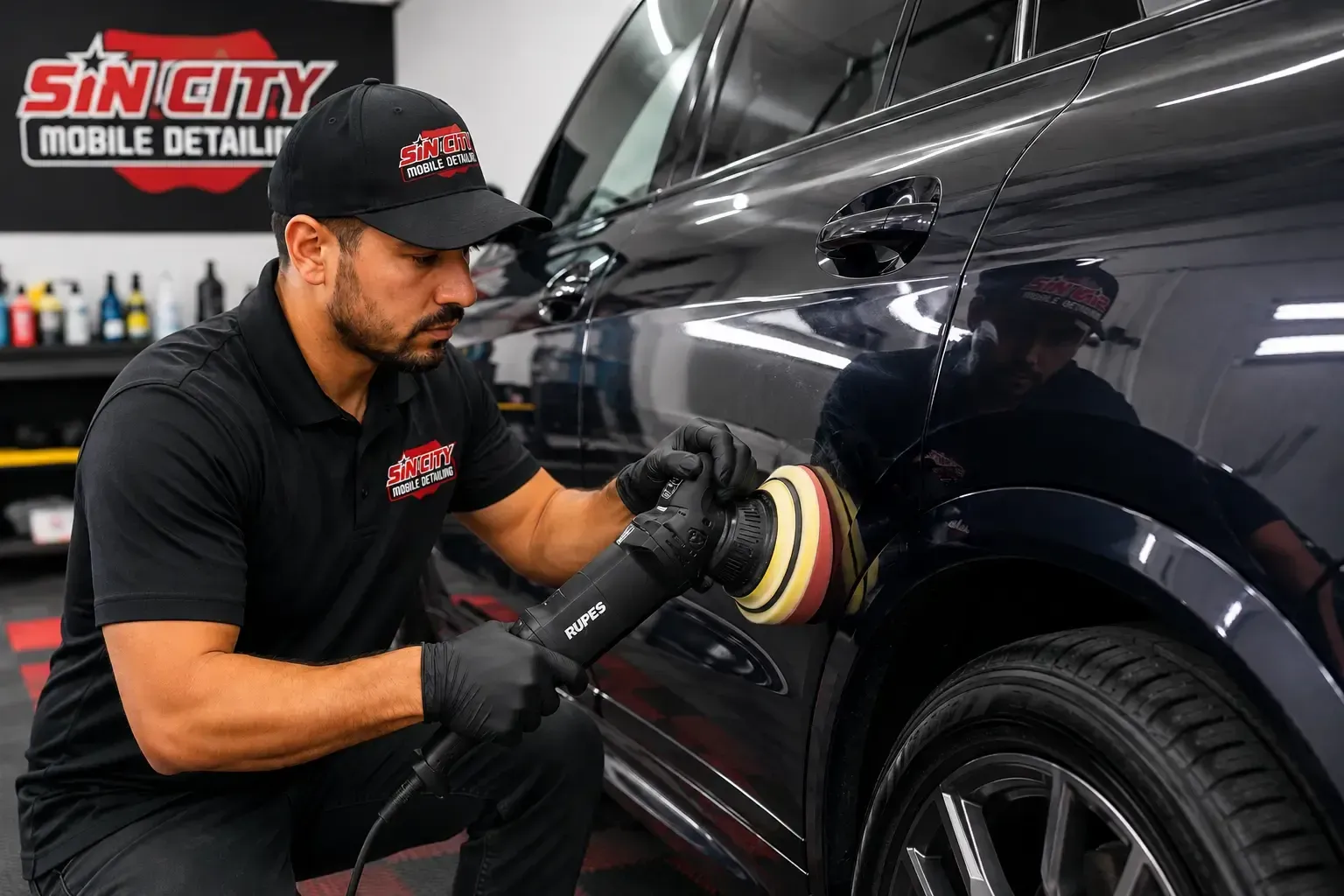
Detailers use specialized machine polishers, abrasive compounds, and polishing pads. They safely remove a microscopic fraction of the clear coat. This leveling process permanently removes the physical defects in the paint.
Swirl marks vanish. Automated car wash scratches disappear. Hard water spot etchings are smoothed out. Once the clear coat is leveled, light reflects perfectly straight back to your eye. This creates a deep, mirror-like finish that looks better than new.
Because this process requires extensive training and specialized tools, it takes significantly longer than detailing. It is an investment in vehicle preservation.
The Three-Step Physical Paint Test
You do not need to be a professional to assess your paint. You can perform a simple three-step test in your own garage.
1. The Plastic Bag Test Wash and dry your car thoroughly. Put your hand inside a thin plastic sandwich bag. Lightly drag your fingertips across the hood. If the paint feels perfectly smooth, your clear coat is clean. If it feels rough or gritty, you have bonded contaminants. A professional detail with a clay bar treatment will fix this.
2. The Sunlight Inspection Park your vehicle in direct sunlight. Stand a few feet back. Look specifically at the reflection of the sun on your door panels. Do you see a pattern of circular spiderwebs? These are swirl marks. Washing and waxing cannot fix these. You will need paint correction to restore the finish.
3. The Water Bead Test Spray water onto a clean section of your hood. If the water forms tight, tall beads that roll off easily, your paint protection is active. If the water sits in flat, irregular puddles, the clear coat is exposed. You need an exterior detail to reapply a protective sealant.
Key Signs Your Vehicle Only Needs a Detail
Most vehicles require regular detailing rather than frequent paint correction. Detailing is about consistent maintenance.
Consider booking a detail if your paint feels rough to the touch. This indicates surface contamination. Families dealing with road trip grime or daily commuter dust benefit greatly from this service.
If your vehicle has lost its slick feeling, a detail is necessary. When water stops beading during rainstorms, your sealant has worn off.
A thorough exterior detail restores protection. It also fits perfectly into a regular maintenance schedule. Many of our clients schedule this service every few months. Bringing the service to your location saves you from waiting in crowded shop lobbies.
When to Invest in Full Paint Correction
Paint correction is not a regular maintenance item. You should only perform this service when necessary.
You need correction if your vehicle looks dull even immediately after a wash. Faded paint indicates heavy oxidation.
Luxury vehicle owners often request this service. If you recently purchased a used car, the previous owner likely took it through automatic washes. Those harsh brushes leave deep marring across the entire body.
Correction is also ideal before selling a high-value vehicle. Removing scratches significantly increases the resale value. SUV and truck owners who frequently navigate dusty off-road trails may also require periodic correction to remove brush scratches.
After investing in this restorative process, most owners choose to apply a ceramic coating. This locks in the flawless finish for years.
Comparing the Two Services
Understanding the distinct differences helps you make an informed decision. Review the technical differences between these two services below.
| Feature | Professional Detail | Paint Correction |
|---|---|---|
| Primary Goal | Clean and protect the surface | Permanently level and restore paint |
| Process Used | Wash, clay bar, chemical cleaning | Machine compounding and polishing |
| Removes Scratches | No | Yes (Swirls, light scratches, oxidation) |
| Time Required | 1 to 3 hours | 4 to 12+ hours |
| Frequency | Every 3 to 6 months | Once every few years |
The Impact of Henderson Weather on Your Vehicle
Location matters when discussing vehicle care. Henderson presents a unique environment for automotive paint. We experience over 300 days of sunshine annually. The intense UV radiation constantly attacks unprotected clear coats.
Furthermore, desert dust acts like fine sandpaper. Every time wind blows sand across your car, microscopic scratches occur. Hard water from local sprinklers also causes severe chemical etching if left to dry on hot metal.
These environmental factors mean local drivers must be proactive. Regular detailing removes the corrosive dust and hard water minerals. It applies a fresh barrier against the sun. We built Sin City Detailing specifically to address these harsh local conditions. Our mobile setup provides professional-grade results without requiring you to leave your air-conditioned home.
Making the Final Decision
Your choice comes down to your current paint condition and your personal goals.
If you simply want a clean, shiny, and protected vehicle for daily commuting, start with a detail. It is cost-effective and highly efficient. You can easily schedule a Mobile Car Detailing Service to maintain your daily driver.
If you demand absolute perfection, correction is your path. If you are preparing for a car show, selling a luxury vehicle, or restoring an older car, you need machine polishing.
Every vehicle tells a different story. If you are still unsure what your specific vehicle requires, professional advice is always available. You can reach out directly to discuss your paint condition with our technicians.
Frequently Asked Questions
How long does the paint correction process take?
The timeline depends entirely on the condition of your vehicle. A single-stage polish on a small car might take four hours. A multi-stage correction on a large, heavily scratched SUV can take over twelve hours. We assess the damage first and provide a clear time estimate before beginning any work.
Will a standard detail remove hard water spots?
A standard detail can remove fresh, light water spots using chemical decontamination. However, if the water spots have baked in the Nevada sun for months, they will chemically etch into the clear coat. Etched water spots require machine polishing and paint correction for complete removal.
Can I get these services done at my office?
Yes. Our business operates entirely on a mobile platform. We bring our own water, power, and professional equipment to your specific location. We regularly service vehicles in residential driveways, corporate parking lots, and parking garages throughout the Henderson area.