Las Vegas Heat vs. Leather Seats: The Ultimate Guide to Keeping Your Car Interior Looking Brand New
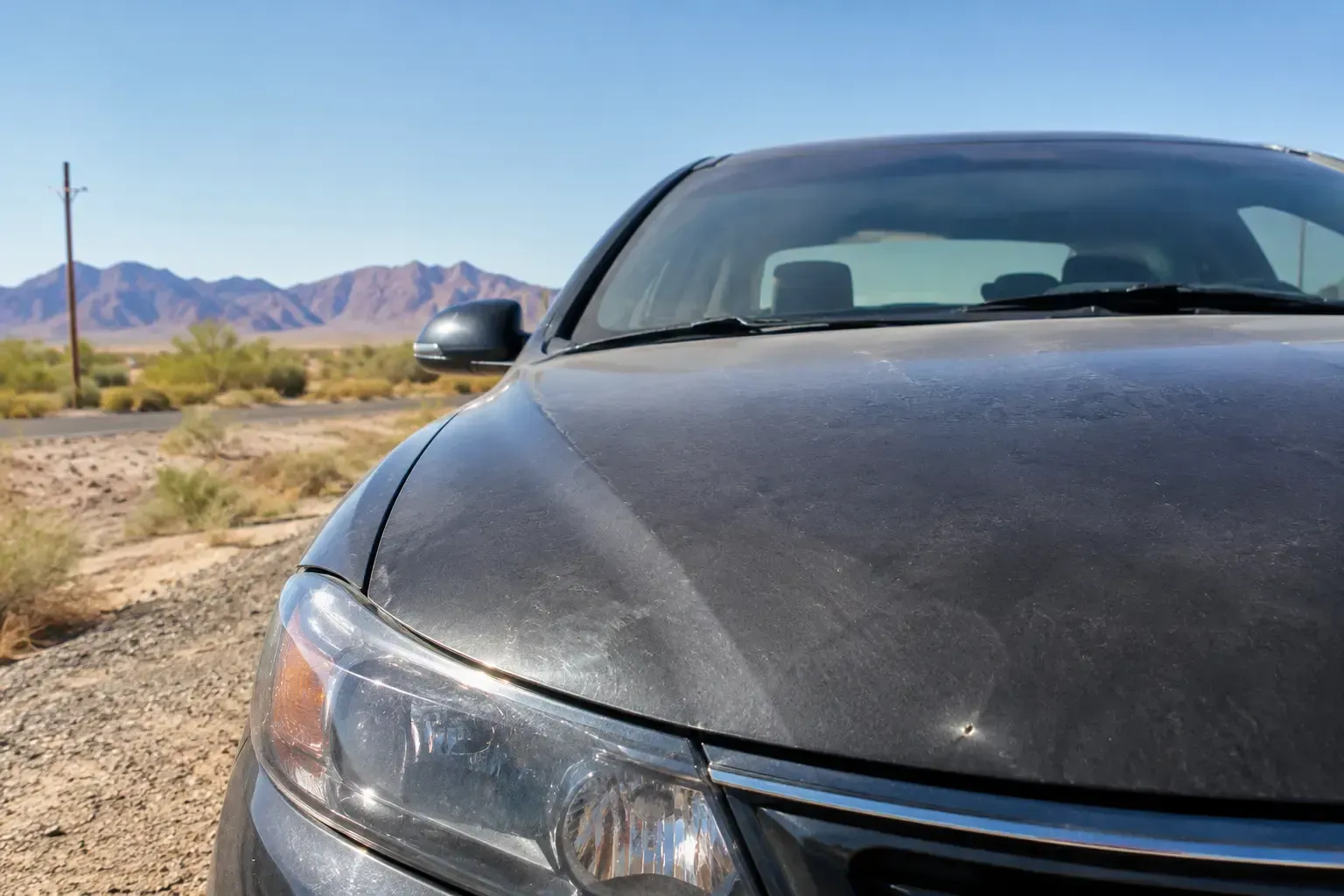
It is a Tuesday afternoon in July. You step out of the air-conditioned sanctuary of a Summerlin shopping center and walk toward your car. As you open the door, a wave of heat—thick, oppressive, and smelling faintly of hot dust—hits you square in the face. You sit down, and even through your clothes, the leather seats feel like they’ve been pulled directly from a kiln. This isn't just a minor inconvenience; it is a daily battle for every vehicle owner in Southern Nevada.
In the Mojave Desert, the sun isn't just a source of light; it’s a relentless force of nature. For car enthusiasts and daily drivers alike, the primary victim of this environment is the interior. Specifically, your leather seats. At Sin City Mobile Detailing, we have spent years studying the unique atmospheric challenges of the Valley. We know that "Las Vegas Heat" isn't just a weather report—it’s a chemical catalyst that accelerates the aging of your vehicle’s most expensive surfaces.

The Science of Destruction: Why the Las Vegas Sun Hates Your Leather
To protect your car, you first have to understand the enemy. The damage caused to leather seats in Las Vegas is a three-pronged attack involving Ultraviolet (UV) radiation, Infrared (IR) heat, and extreme dehydration.
1. UV Radiation and Molecular Breakdown
Leather is an organic material. Much like human skin, it is composed of fibers held together by proteins and fats. UV rays from the sun break down these molecular bonds. This process, known as photodegradation, leads to the fading of dyes and the weakening of the leather’s structural integrity. When you see leather that looks "bleached" or "chalky," you are looking at UV damage in its advanced stages.
2. The Greenhouse Effect and Thermal Expansion
On a 110°F day in Las Vegas, the interior of a car parked in the sun can reach staggering temperatures of 160°F to 180°F within an hour. This "Greenhouse Effect" traps heat inside. As the leather heats up, it expands. When the sun goes down or you blast the AC, it rapidly contracts. This constant cycle of expansion and contraction causes the leather to lose its elasticity, eventually leading to the dreaded "spider-web" cracking pattern.
3. Outgassing and Essential Oil Loss
Modern automotive leather is treated with specialized oils and conditioners during the tanning process to keep it supple. Extreme heat causes these oils to "outgas." If you’ve ever noticed a greasy film on the inside of your windshield, that is often the evaporated oils from your dash and seats. Once these oils are gone, the leather becomes brittle, turning your luxurious interior into something that feels more like cardboard.
Immediate Preventative Measures: Your First Line of Defense
Before we dive into professional restoration and protection, there are several "low-tech" habits that every Las Vegas driver should adopt. At Sin City Mobile Detailing, we believe that education is just as important as the services we provide.
- High-Quality Sunshades: Don't settle for the $5 flimsy shades. Invest in a custom-fit, thick reflective shade. This can lower your dashboard and front seat temperature by up to 40 degrees.
- Ceramic Window Tint: Standard dyed tint only blocks light. Ceramic tint blocks Infrared (IR) heat and 99% of UV rays. It is the single best investment you can make for your car’s interior longevity.
- Cracking the Windows: If you are parked in a secure area, leaving your windows open by just half an inch allows hot air to escape, reducing the peak internal temperature.
- Parking Strategy: It sounds simple, but many ignore it. Always park with the rear of the car facing the sun if you don't have a sunshade. This protects the steering wheel and front seats from direct exposure.
The Anatomy of Leather Care: Cleaning vs. Conditioning
Many owners make the mistake of thinking a quick wipe-down with a "2-in-1" product is enough. In the desert, that approach is a recipe for disaster. To keep your interior looking new, you need a two-stage process.
The Cleaning Phase
Dirt and sweat are abrasive. When you sit on a dusty leather seat, those microscopic particles act like sandpaper, grinding away the protective topcoat. Use a dedicated, pH-balanced leather cleaner and a soft boar’s hair brush to agitate the pores of the leather. This lifts the dirt out rather than just smearing it around.
The Conditioning Phase
In Las Vegas, conditioning isn't optional; it’s life support for your seats. You need a conditioner that penetrates the surface and replaces the lost oils without leaving a greasy residue that attracts more dust. Look for products containing vitamin E and collagen—yes, the same things used in high-end skincare.
Advanced Protection: Why Ceramic Coating for Leather is a Game-Changer
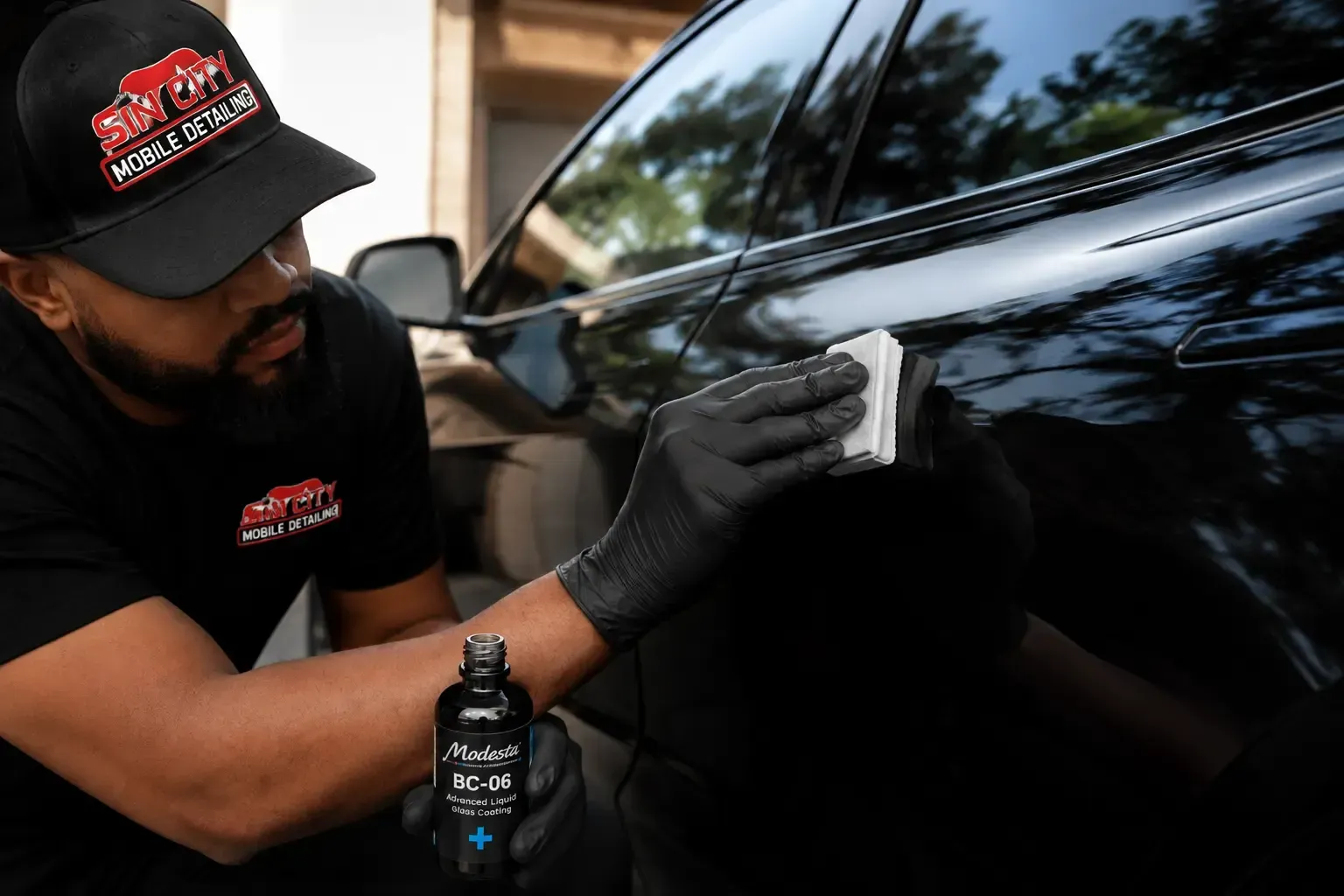
If you really want to stop worrying about the heat, you need to look beyond traditional conditioners. At our main services hub, we often recommend Ceramic Interior Coatings. Unlike a conditioner that sits on the surface and eventually wears off, a ceramic coating for leather creates a semi-permanent, breathable barrier.
This barrier provides several unique advantages for the Vegas climate:
- Superior UV Rejection: It acts like a high-SPF sunscreen that doesn't wash off.
- Hydrophobic Properties: Spilled iced coffee or sweat from a gym session will bead up on top of the leather rather than soaking into the hide.
- Dye Transfer Resistance: It prevents the blue dye from your jeans from staining light-colored leather—a common issue when the heat makes dyes more volatile.
The Sin City Mobile Detailing Professional Touch
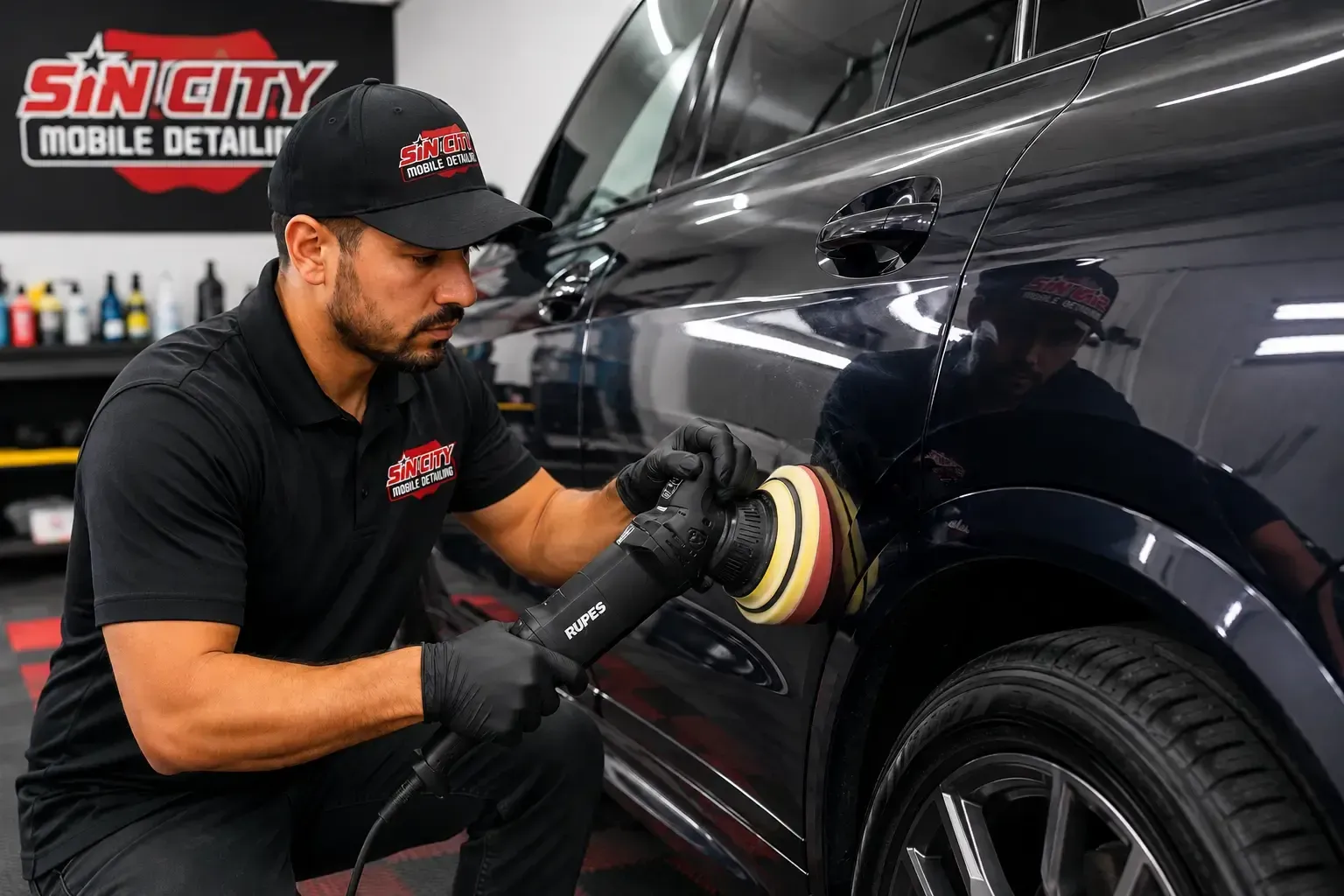
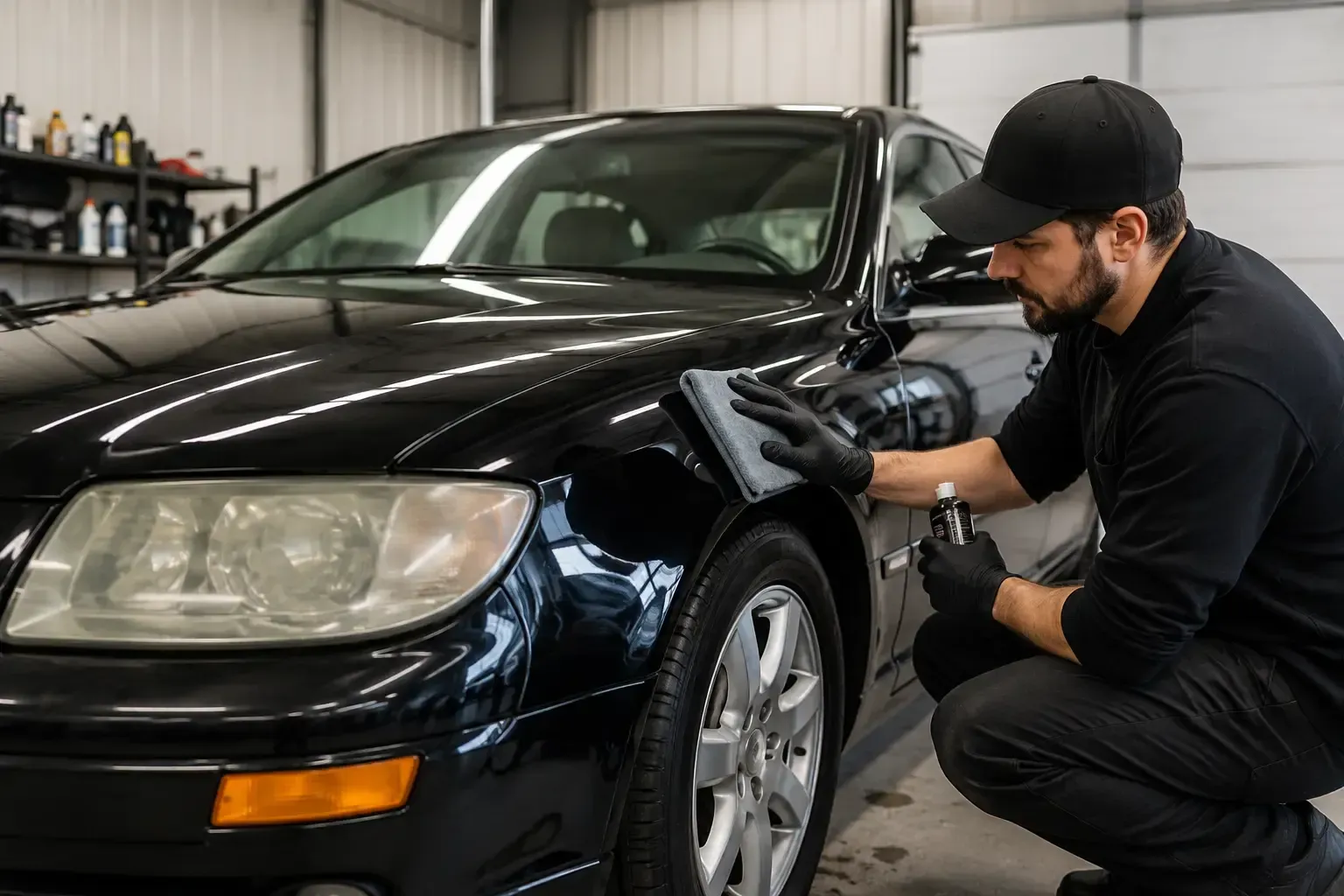
While DIY maintenance is great, the harshness of the Nevada climate often requires a professional intervention. Our team doesn't just "clean" cars; we preserve assets. We understand that your vehicle is likely your second largest investment, and its resale value is heavily tied to the condition of the interior.
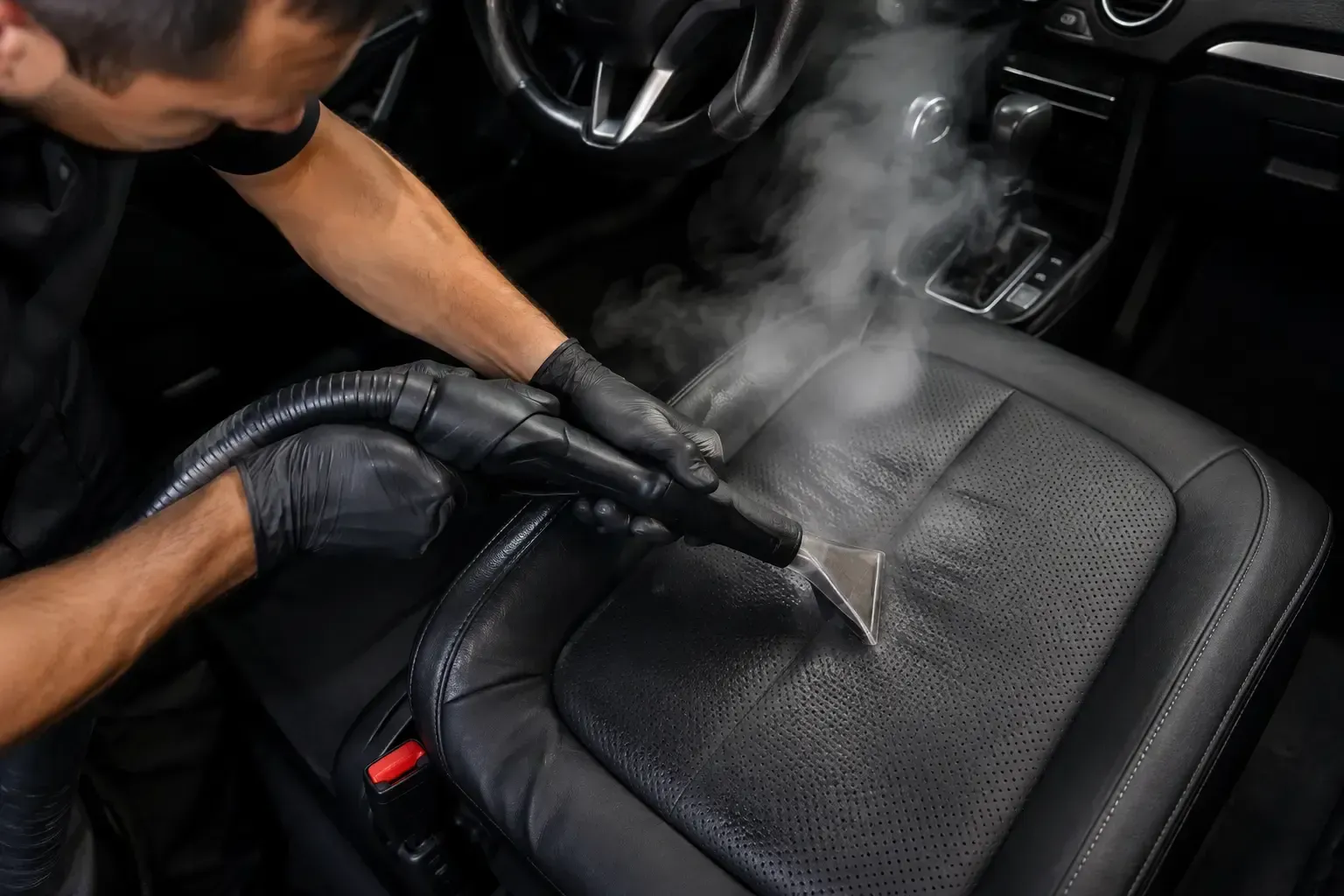
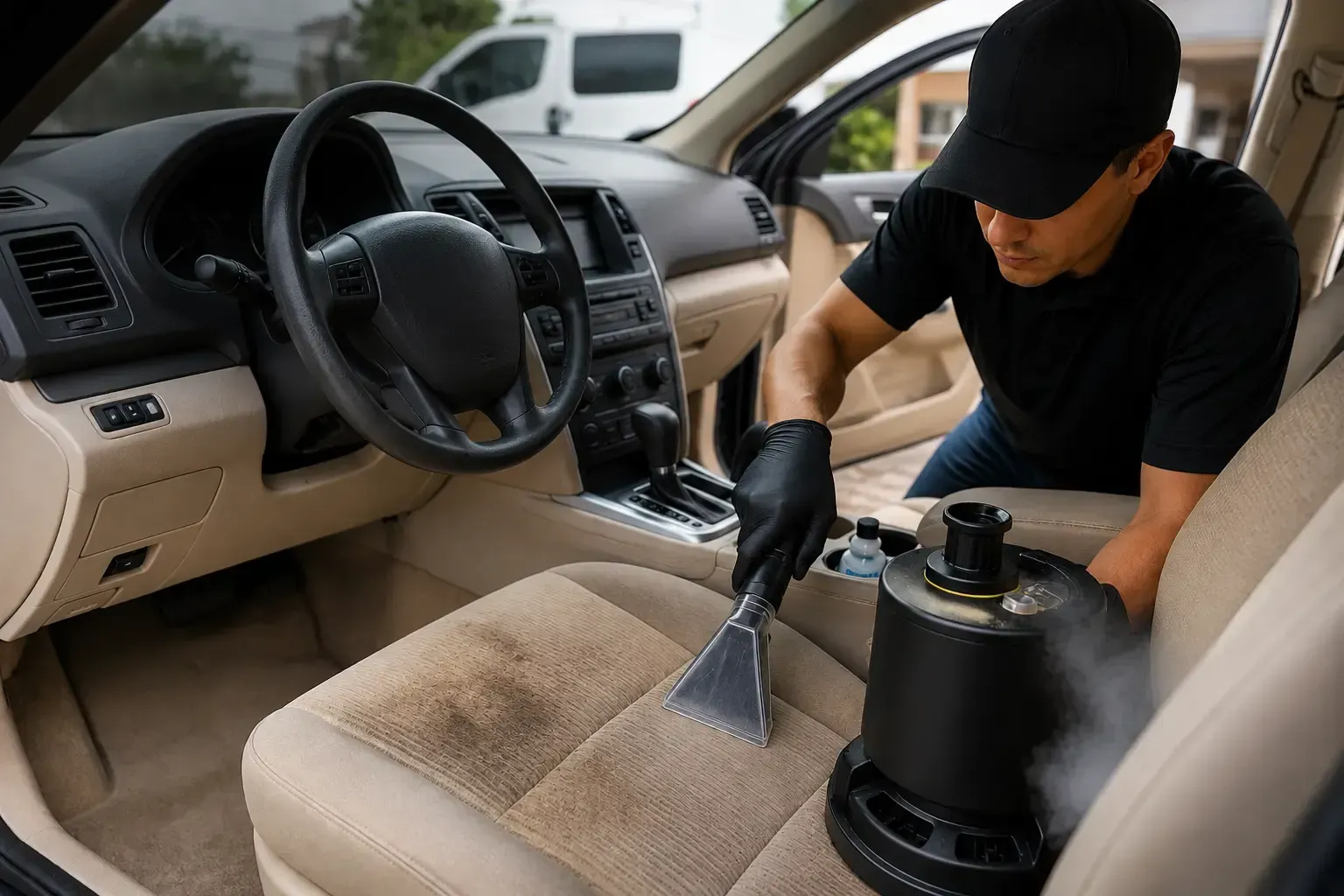
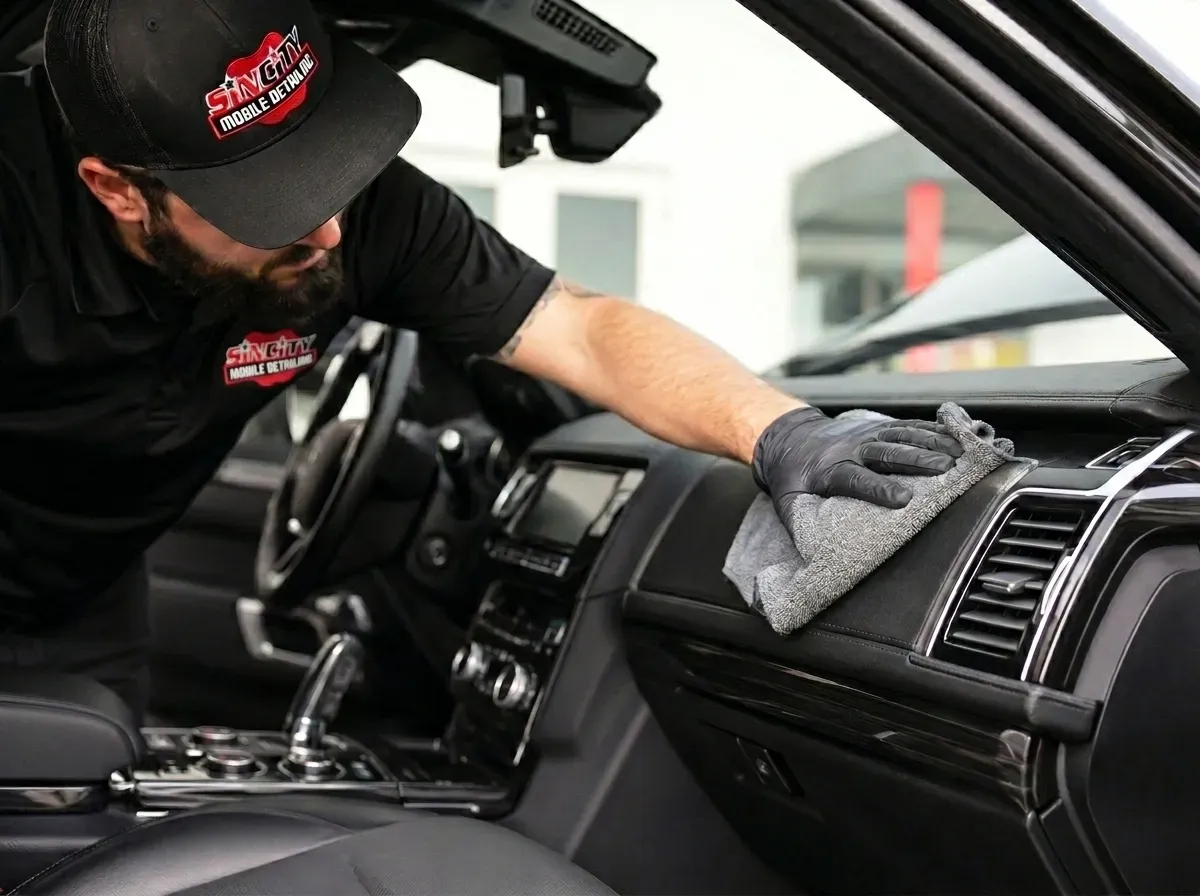
When we perform an interior detail, we utilize steam cleaning technology. Steam allows us to open the pores of the leather safely, extracting deep-seated contaminants without the use of harsh chemicals that could further dry out the material. We then follow up with a deep-infusion conditioning treatment that is specifically formulated for high-heat environments.
Common Myths About Leather Care in the Desert
There is a lot of bad advice on the internet. Let’s debunk a few myths that could actually harm your car:
Myth 1: "Baby wipes are great for a quick clean." False. Baby wipes are designed for skin and often have a pH level that is too high for automotive leather, which can strip the protective clear coat over time.
Myth 2: "Leather doesn't need care if it's new." False. New leather is often at its most vulnerable because the factory oils are fresh and highly susceptible to outgassing in the summer heat.
Myth 3: "Household furniture polish works on car seats." Absolutely not. These products contain silicones that can create a "sealed" surface, preventing the leather from breathing and causing it to crack from the inside out.
A Maintenance Schedule for the Las Vegas Driver
Consistency is the key to longevity. Here is the schedule we recommend for our clients at Sin City Mobile Detailing:
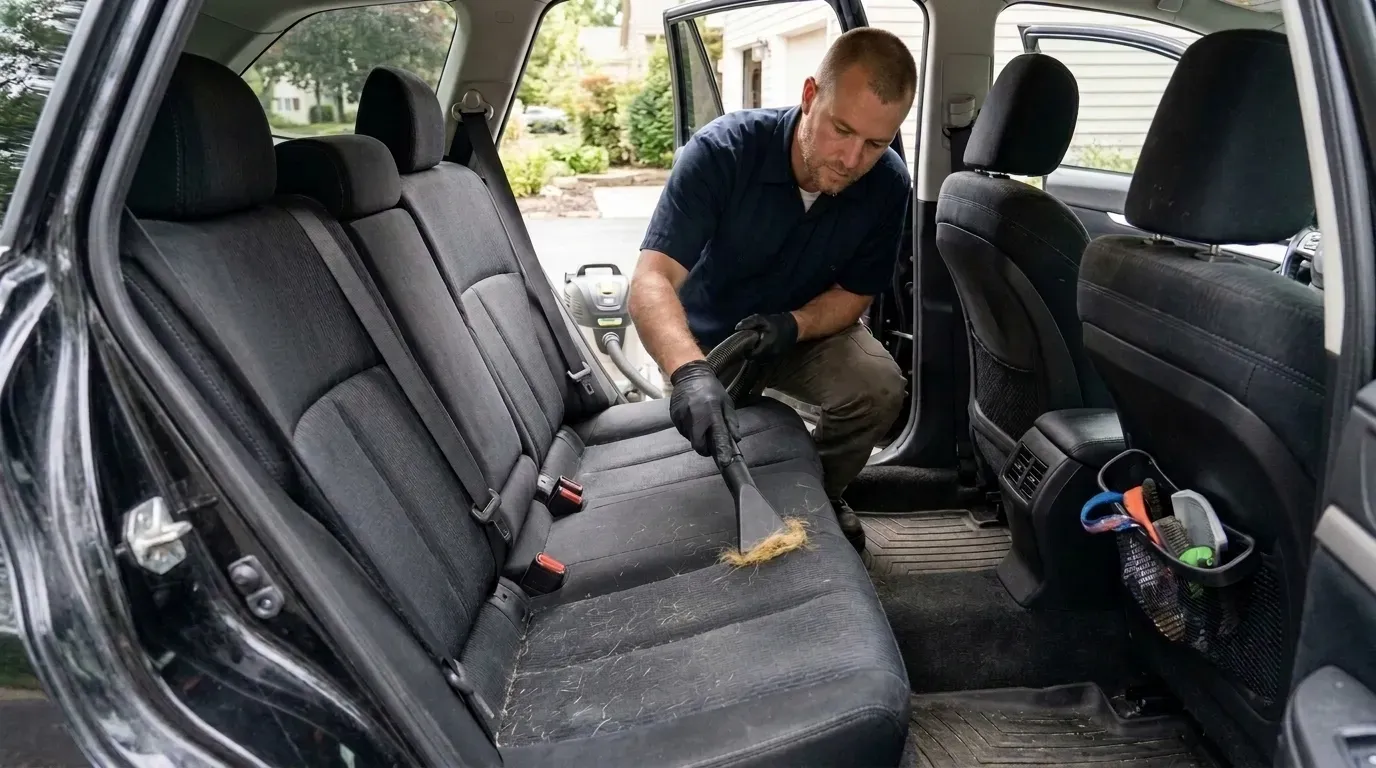
- Weekly: Vacuum the seats to remove abrasive dust. Wipe down with a damp (not soaking) microfiber cloth.
- Monthly: Apply a light leather protectant with UV inhibitors.
- Quarterly: Perform a deep clean and heavy conditioning treatment.
- Annually: Have a professional detailer inspect the leather and apply a fresh ceramic layer or deep hydration treatment.
Restoring the "New Car" Feel
Even if your leather has already started to show signs of stiffness or minor fading, it’s rarely too late. Professional-grade leather softeners can often revive hides that seem beyond repair. However, once the leather has physically cracked, the only solution is a costly reupholstery job. This is why prevention is so much cheaper than the cure.
By following these steps, you aren't just maintaining a car; you’re preserving your comfort and your vehicle's value. The Las Vegas sun is a formidable opponent, but with the right strategy and a little help from the experts, your leather seats can remain as soft and supple as the day you drove off the lot.
Frequently Asked Questions
How often should I condition my leather seats in Las Vegas?
In the extreme Las Vegas heat, you should condition your leather seats every 30 to 60 days. The low humidity and high UV exposure accelerate oil evaporation, making frequent replenishment necessary to prevent cracking and maintaining the leather's natural elasticity and soft texture.
Does window tint really protect leather car seats?
Yes, especially ceramic window tint. High-quality ceramic films can block up to 99% of UV rays and significantly reduce infrared heat. This prevents photodegradation (fading) and keeps the internal temperature of the leather below the threshold where molecular breakdown and outgassing typically occur.
Can I use coconut oil or olive oil on my leather seats?
No, you should never use food-grade oils on automotive leather. These oils can go rancid, create an unpleasant odor, and attract dirt. More importantly, they don't have the correct molecular structure to penetrate automotive topcoats and can lead to permanent staining or leather rot.
Why is my leather turning hard and brittle?
Leather turns brittle when it loses its internal moisture and essential oils, a process accelerated by the 100°F+ temperatures in Nevada. This "drying out" causes the fibers to stiffen and eventually snap under pressure, which manifests as visible cracks or a "cardboard-like" feel to the touch.
Is a professional interior detail worth it for older cars?
Absolutely. A professional detailer can use specialized tools like steam extractors and pH-neutral deep cleaners to remove years of embedded grime. Following this with a professional-grade conditioner can often restore significant suppleness to older leather, preventing further degradation and improving the vehicle's resale value.